With snow-covered mountains, sun-drenched beaches, empty deserts, gleaming lakes and deep forests, Georgia has huge potential not only as a destination for traditional businesses from overseas, but also for foreign investors in the arts. The countrys varied locations and stunning landscapes, all within no more than a days distance from each other, provide a great opportunity for filmmakers looking to produce movies with spectacular backdrops at low costs. Producers are beginning to sit up and pay attention, with Georgia stepping into the spotlight of the global movie industry.
Indian filmmakers have been the first to look into the vast opportunities the country has to offer, with a delegation from Bollywood touring Georgia between January 29 and February 1, eyeing up potential filming locations.
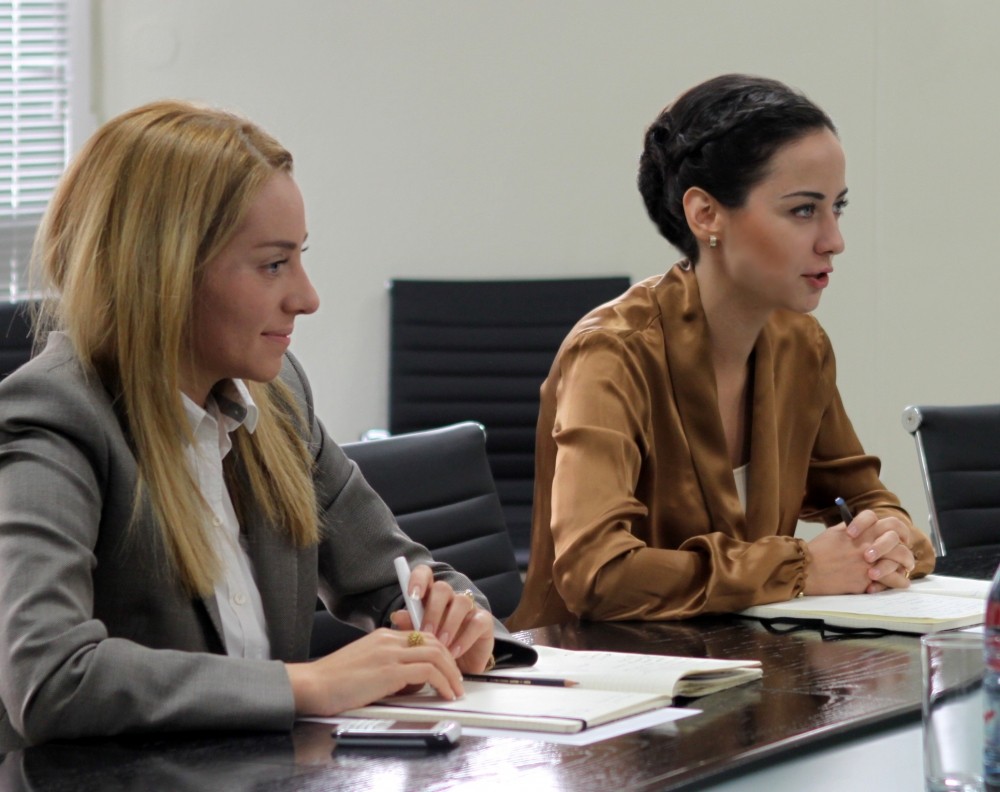
Vera Kobalia, Georgias Minister of Economy and Sustainable Development, was one of the first government officials to meet with the Bollywood delegation. The meeting saw discussion surrounding potential future bilateral filmmaking projects. An agreement was signed between the Ministry and the Bollywood producers during the Ministers visit to India in November, 2010. The agreement was followed up in Mumbai, on February 22, 2011 when Vera Kobalia and Kakha Baindurashvili, Minister of Finance, held a meeting with Indian businesses to discuss opportunities for future cooperation.
During their stay in Georgia, the Bollywood delegation also met with Nikoloz Rurua, Minister of Culture, whose ministry had played a key role in bringing the producers to the country. When speaking about the visit, Rurua noted: “It is a great success for our country... The Indian producers are making a promotional video on Georgia, which will be shown to leading Indian producers and TV channels. We want to give Georgians working in the film industry the opportunity to find work through our Bollywood partners and show their talent to the world.”
After visiting areas in both Georgias lowlands and highlands, Narendra Bajaj, a producer with Siddhi Vinayak Creations, gave his first impressions, describing the countrys locations as unique and praising the available infrastructure, “I think everything [here] works for the film industry,” he noted excitedly.
The five member-delegation, which Narendra Bajaj aside included, Varun Bajaj, co-producer; Chirag Bajaj, executive producer; Roop Naik from Zip Pap Zoom Productions, and other high-profile industry insiders, started their journey through Georgia from Tbilisi. Their itinerary in the capital featured the Rustaveli Theatre, Narikala Fortress, the National Museum, the National Library, Maidan Palace, Lisi Lake, Turtle Lake, Sharden Street, Sukhishvilebi National Ballet, and the Jansugh Kakhidze Music and Culture Center.
Narendra Bajaj described Georgia as a “very compactly beautiful” country, adding that “every location is very good by itself – mountains, beaches, lakes, palaces, modern cities and theyre very, very close to each other.”
In addition to Tbilisi, the Indian delegation visited a large number of sites in the countrys regions, including Batumi and Kobuleti on the Black Sea coast, as well as Paliastomi Lake and Poti Port.
Their trip to western Georgia also took in Mestia, a mountainous region famed for its medieval fortresses and breathtaking landscapes. The delegation also visited the town of Martvili in Samegrelo region where they saw the famous Martvili cave, before taking in the sights of the city of Kutaisi - Georgias historical cultural center. Sataplia Cave near Tskaltubo also made an unforgettable impression on the filmmakers. In Eastern Georgia, the delegation visited the city of Signagi in the wine-rich Kakheti region, toured the Aleksander Chavchavadze Museum in Tsinandali, and the vineyards and wine cellars of the village of Napareuli.
The Georgian National Investment Agency (GNIA), a government body responsible for attracting foreign direct investment, played host to the visit. According to Keti Bochorishvili, the director of GNIA, Georgia, with its small size and diverse landscapes offers much cheaper filming opportunities than its European rivals. Georgia was a genuine discovery for the Indian producers, with its untouched nature and impressive geographic features. One of the biggest advantages is that travel between locations in the country can take as little as a few hours, keeping expenses down, speeding up production.
Its not only Bollywood producers that are eager to find quality locations at low costs, Georgia expects that interest from filmmakers from other countries will follow. It is also hoped that a potential boom in the film industry will bring a corresponding rise in the number of international visitors. Bollywood movies could serve as the best advertising Georgia could ever have: Indian movies are popular around the world; the Georgian government hopes that bringing Bollywood to the country could help raise awareness of Georgia internationally. India, with its increasingly large and mobile middle-class could become a great new source of tourists keen to see the locations where their favorite films were shot.
Siddhi Vinayak Creations, one of the film production companies visiting Georgia, is internationally renowned, with films shot by the company being shown not only in India but also in countries like the USA, the UK, Singapore, the Middle East and South East Asia.
For the Georgian National Investment Agency, Switzerland is an inspiration; the country has been the location for a host of Bollywood movies and has been able to reap the rewards. The Bollywood producers noted that many Indians, impressed by the beautiful locations featured in the movies, visited Switzerland to see them for themselves.
Similarly, there are predictions that I hate luv stories, one of Bollywoods most recent blockbusters, shot in Queenstown, New Zealand, will see more Indian visitors to New Zealand. To date, the movie has been seen by 150 million people.
According to official statistics, Indian tourists visiting New Zealand spend approximately $ 100 million annually.
In 2010, the number of visitors to Georgia exceeded 2 million. In the future, should this figure be swollen by Indians coming for film tourism, the economic benefits for Georgia could be substantial.
“The film industry is very much connected with tourism,” noted Roop Naik, who makes commercial advertisements as well as feature films. “You have the beautiful places, hospitable people and strong infrastructure.”
The Indian producers said they are seeking long-term cooperation. They hope to come back by the end of the April or May to carry out the next stage of their assessment. Meanwhile, the process of selecting scripts will begin, and once decisions have been made, specific locations will be identified.
During their stay in Georgia, the Bollywood producers made a promotional video on Georgia which will be distributed to leading Indian producers, film studios and news agencies.
Georgia as a filming location has also attracted interest from western producers. Following the visit from the Indian filmmakers, delegations of TV and Film producers from the Czech Republic and Ukraine are expected to visit Georgia this March.